Accumulator Construction Across Seasons: Connecting Football Performance Cycles to Horse Racing Distance Choices
Greta Baumann · Aug 16, 2026
Accumulator Construction Across Seasons: Connecting Football Performance Cycles to Horse Racing Distance Choices
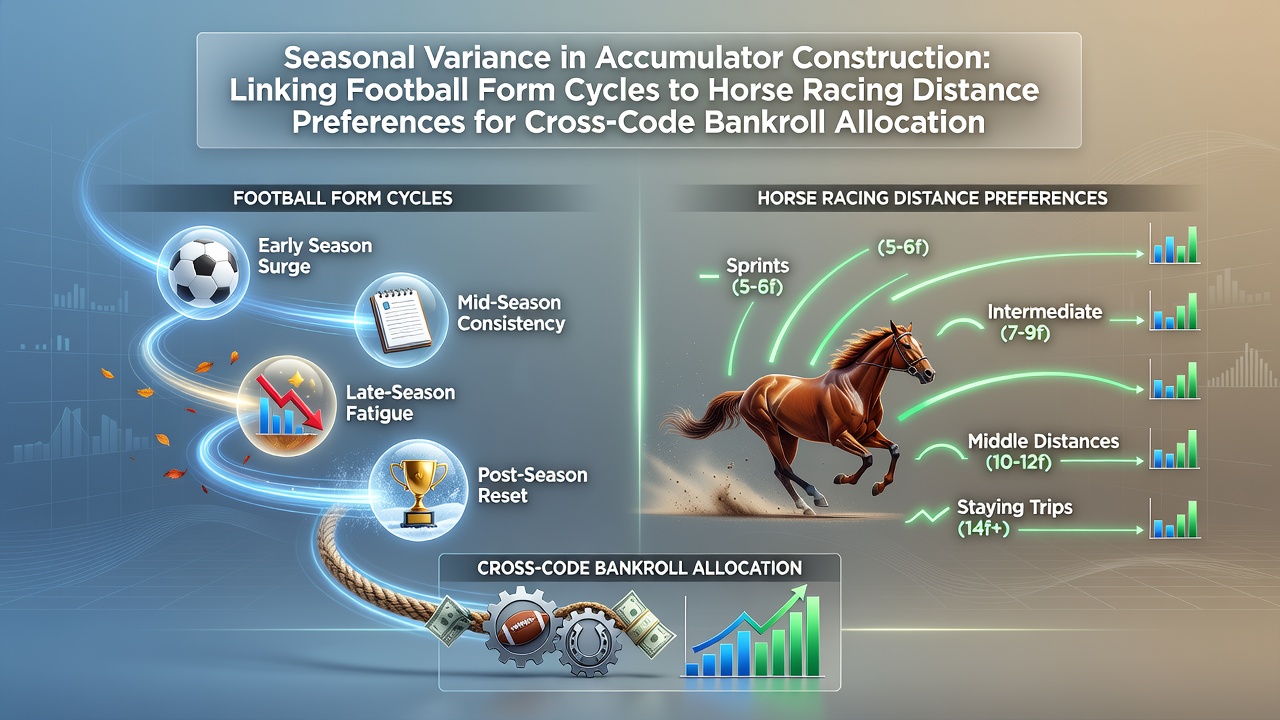
Seasonal variance plays a central role in accumulator construction when bettors examine football form cycles alongside horse racing distance preferences, and this approach supports cross-code bankroll allocation strategies that adjust throughout the year. Observers note that football leagues typically follow a pattern where early season matches reveal team fitness levels, while mid-season periods often show stabilized performance metrics according to league data releases.
Football Form Cycles and Their Seasonal Markers
Football seasons begin in August across major European competitions, and data from performance tracking services indicate that teams display higher variance in results during the opening weeks because of squad changes and fixture congestion. Researchers have tracked these cycles for several years, finding that goal scoring rates tend to rise in September before settling into more predictable patterns by November. Those who study these trends often combine early season statistics with historical benchmarks to identify teams that maintain consistent home or away records through different phases of the campaign.
Form cycles also shift around international breaks, and analysts report that clubs with deeper squads manage these interruptions more effectively, leading to steadier results in the weeks that follow. Bankroll allocation models incorporate these observations by scaling stake sizes upward during periods of lower variance and reducing exposure when multiple teams face congested schedules simultaneously.
Horse Racing Distance Preferences Across the Calendar
Horse racing distance preferences change with ground conditions and seasonal weather patterns, and records from racing authorities show that longer distances become more prevalent in autumn meetings while sprint races dominate summer cards. Trainers adjust their stable selections accordingly, with certain horses demonstrating clear preferences for specific trip lengths that align with particular months. Studies of past results reveal that horses returning from breaks perform differently over varying distances, and these patterns help inform accumulator selections that pair racing outcomes with football matches on the same betting slip.
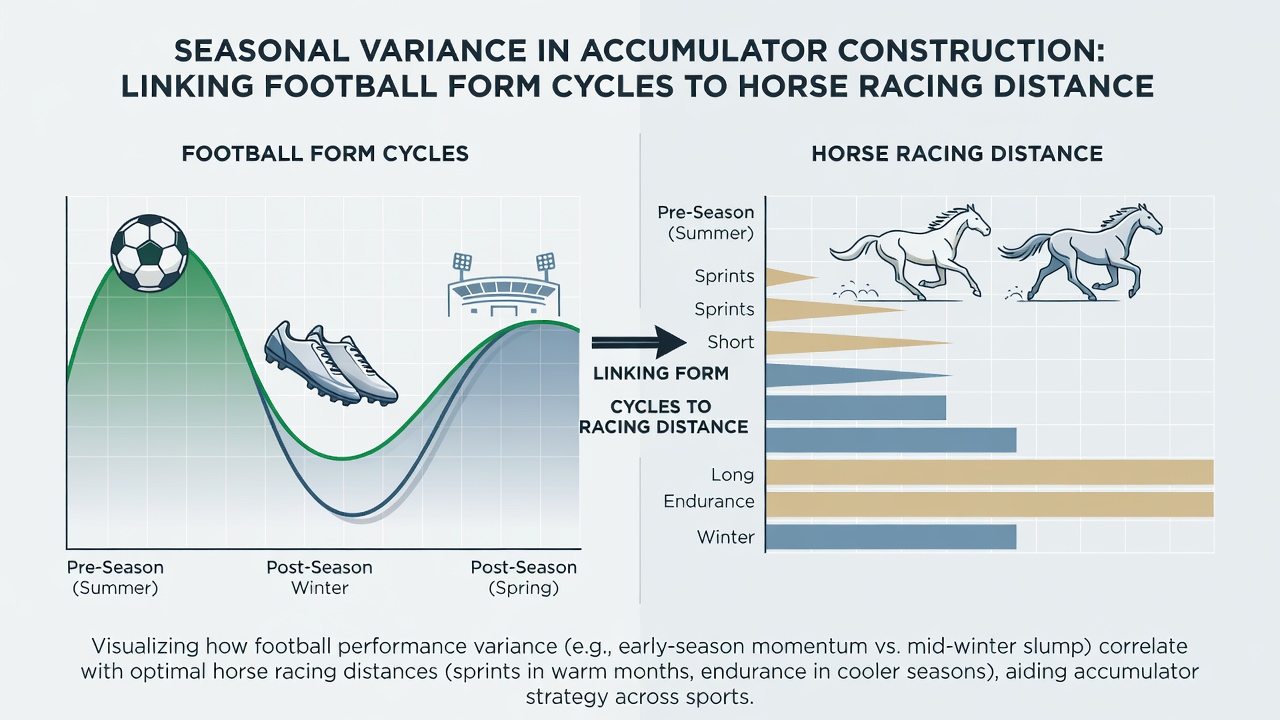
Ground conditions further influence distance suitability, and data collected by industry groups demonstrate that softer surfaces in winter months favor stayers over sprinters in many regions. Bettors who monitor these variables often build accumulators that include a mix of distance-specific selections timed to current seasonal conditions rather than applying uniform criteria year-round.
Integrating the Two Codes for Accumulator Builds
Cross-code accumulator construction requires coordination between football form data and racing distance statistics, and practitioners report that successful combinations frequently pair midweek football fixtures with weekend racing cards. Performance databases allow users to filter selections so that football teams showing strong recent form align with horses suited to prevailing distance and ground profiles. Bankroll allocation then distributes funds across both codes based on the number of viable selections available in each sport during a given week.
August 2026 brings the start of new football seasons in several leagues while horse racing schedules transition toward autumn meetings, and figures from European racing federations indicate that this period produces distinct overlaps in data availability. Allocation models adjust by increasing the proportion directed toward football early in the month before shifting emphasis toward longer-distance racing events as fixtures progress.
Bankroll Allocation Frameworks
Bankroll allocation frameworks divide available funds according to seasonal opportunity counts, and quantitative analyses from sports research organizations show that maintaining separate ledgers for each code reduces overlap risk. One common method assigns higher percentages to football during periods of lower variance and reserves larger portions for racing when distance preferences become more predictable due to consistent ground conditions. Those applying these frameworks track monthly performance separately before recombining totals for overall review.
Additional tools include correlation checks between codes, and reports from academic studies on betting markets highlight that simultaneous events sometimes exhibit independent movement patterns that support diversified accumulator construction. This separation allows practitioners to maintain steady allocation ratios even when one code experiences temporary data gaps.
Conclusion
Seasonal variance in accumulator construction continues to connect football form cycles with horse racing distance preferences through structured bankroll allocation methods. Data from multiple tracking services and racing authorities demonstrate that adjusting selections and stake distributions according to calendar phases provides a factual basis for cross-code approaches. Observers continue to monitor these patterns as new seasons unfold, and the integration of performance records from both sports supports ongoing refinement of allocation models.